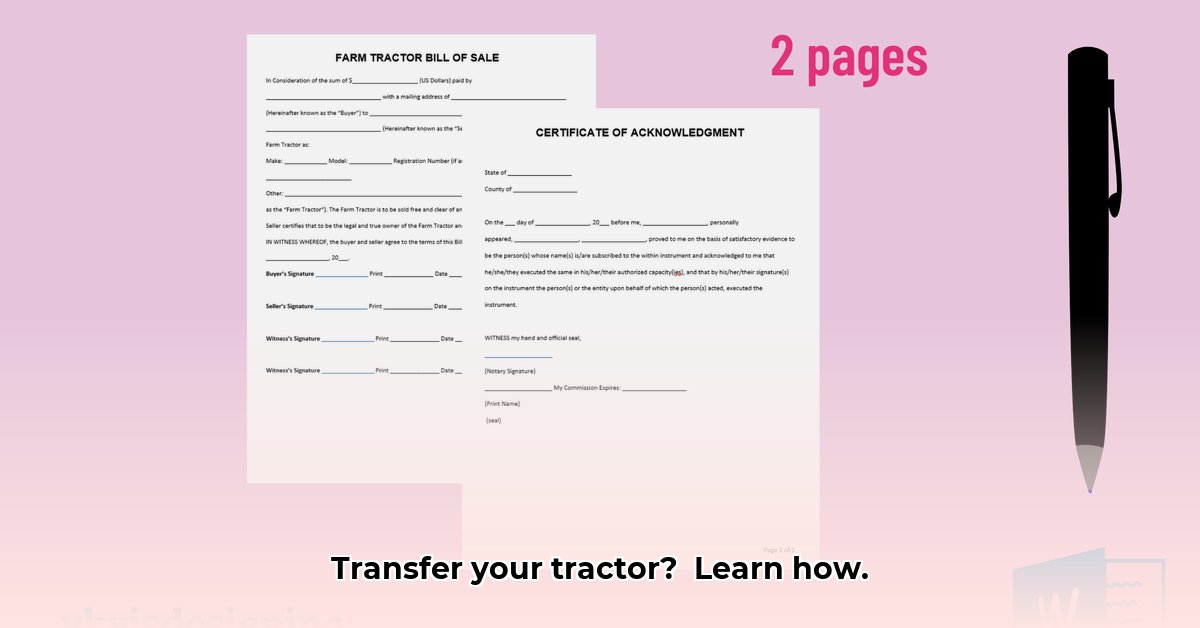
Transferring ownership of a tractor is more than just handing over the keys; it involves legal procedures, financial considerations, and implications for sustainable farming practices. This guide provides a comprehensive, step-by-step approach to ensure a smooth and responsible transfer. For even more detailed guidance, check out this helpful resource: tractor ownership transfer guide.
Methods for Transferring Tractor Ownership
Several methods exist for transferring tractor ownership, each with unique legal, financial, and sustainability implications. Choosing the right method depends on your specific circumstances, including your relationship with the recipient, your financial situation, and your long-term farming goals.
1. Outright Sale: A Direct Transaction
This is the simplest method, involving a direct sale for an agreed-upon price. It's ideal for quick transactions but may lead to higher immediate tax liabilities.
- Process: Agree on a fair market price (consider professional appraisal), create a detailed bill of sale including tractor description and condition, officially transfer the title, and receive payment.
- Financial Implications: Capital gains taxes are typically due on any profit made above the original purchase price, potentially including depreciation recapture (tax on previously claimed depreciation).
- Legal Considerations: A legally sound bill of sale is crucial. Consult a lawyer for complex situations.
- Sustainability Considerations: The new owner's farming practices will determine the long-term sustainability impact. Consider discussing their approach to ensure responsible use.
2. Installment Sale: Payments Over Time
This method allows the buyer to pay over time, making it suitable for buyers with limited upfront capital. It spreads the tax liability over several years and provides you with a more manageable payment structure. It also maintains a closer relationship with the buyer over time.
- Process: Develop a payment schedule, interest rate (if any), and a detailed written contract outlining payment terms and consequences for late payments.
- Financial Implications: The capital gains tax is spread over the payment period, minimizing your immediate tax burden. Interest earned will be taxable income as well. Consult a tax professional for guidance.
- Legal Considerations: A comprehensive contract is essential, covering default situations and all critical financial aspects. Legal review is strongly encouraged.
- Sustainability Considerations: The contract could incorporate clauses encouraging sustainable farming practices by the new owner.
3. Gradual Transfer: A Phased Approach
This is ideal for family transfers, allowing a smooth transition of ownership and operational knowledge. Tax implications are spread out, offering potential tax advantages.
- Process: Outline a detailed contract specifying how ownership transfers over a defined period, potentially tied to performance milestones or yearly profits. This enables the recipient to gradually assume responsibility and gain experience.
- Financial Implications: Capital gains and other tax implications are typically spread out over several years, lowering the tax burden in any single year.
- Legal Considerations: Careful legal planning is crucial due to the extended timeframe and potential for complex tax ramifications. Seek professional legal advice.
- Sustainability Considerations: This method excels at preserving sustainable farming practices within the family, ensuring knowledge and responsibility are passed down effectively.
4. Lease with Option to Purchase: A Trial Period
This provides a trial period for the buyer, allowing them to test the tractor before committing to full ownership. This creates a positive relationship with the buyer while still providing revenue streams.
- Process: Draft a lease agreement specifying the rental duration, payments, and purchase price at the end of the lease (this should be carefully negotiated).
- Financial Implications: You receive regular income during the lease; the tax treatment would depend on how the lease is structured, and again, tax advice is crucial.
- Legal Considerations: A comprehensive lease agreement protecting your rights while ensuring clarity for the buyer is critical.
- Sustainability Considerations: This method helps individuals start farming without large upfront expenses, promoting sustainable practices.
5. Gifting: A Family Transfer
This method involves transferring ownership without financial compensation, suitable for family members or close associates. Tax implications are significant and require careful planning before a transfer.
- Process: Complete a gift tax return to officially transfer title, acknowledging the gift, and handling any necessary tax reporting.
- Financial Implications: Gift taxes may apply if the tractor's value exceeds the annual gift tax exclusion. Consult a tax professional for proper reporting.
- Legal Considerations: Seek advice from a tax advisor and estate planning attorney to understand your tax liability and ensure a legal transfer.
- Sustainability Considerations: The success of this hinges on the recipient's commitment to using the tractor sustainably.
Choosing the Right Method: A Decision Framework
The best method depends on several key factors:
- Your relationship with the recipient: Family, friend, or business acquaintance?
- Your financial objectives: Immediate cash needed or payments over time acceptable?
- Your sustainability goals: Do you want to ensure responsible use of the tractor in the future?
| Factor | Outright Sale | Installment Sale | Gradual Sale | Lease to Own | Gift |
|---|---|---|---|---|---|
| Transfer Speed | Fast | Moderate | Slow | Moderate | Immediate |
| Financial Risk | Low | Moderate | Moderate | Moderate | High |
| Tax Complexity | Moderate | High | Moderate | Moderate | High |
| Family suitability | Less Ideal | Ideal | Ideal | Less Ideal | Ideal |
Tractor Transfer Checklist
- Obtain a professional appraisal of your tractor's value.
- Perform necessary maintenance and repairs before the transfer.
- Thoroughly document the tractor's condition (photos, detailed description).
- Prepare or have a lawyer prepare the necessary legal documents (bill of sale, contract, etc.).
- Officially transfer the title.
- Consult tax professionals to understand and manage tax implications.
Remember, this process has significant legal and financial implications. Consulting with agricultural extension offices, legal professionals, and tax advisors is highly recommended to ensure a smooth and responsible transfer of your tractor. A well-planned transfer not only simplifies the process but also safeguards your farming legacy and sustainable practices.